
Criminal Court Records in Union County
A Union County criminal court record is the court case file that begins when a criminal charge is filed with the court. It can include the charging document, case number, defendant name, arraignment, plea, motions, hearings, docket entries, disposition, judgment, sentence, restitution, fines, probation terms, warrants, and failure-to-appear events. It is broader than the charge line shown on a jail roster because it tracks what the court did with the case after filing.
Union County Circuit Court is the main state trial court for felony and many misdemeanor criminal cases in Union County, Oregon. Justice Court and La Grande Municipal Court can hold citation, violation, or city ordinance records depending on the issuing agency and court listed on the citation. Federal criminal cases are separate and use the U.S. District Court for the District of Oregon, not OJD's Union County Circuit Court register.
The District Attorney source from Union County shows the local prosecutor office tied to filed criminal cases.
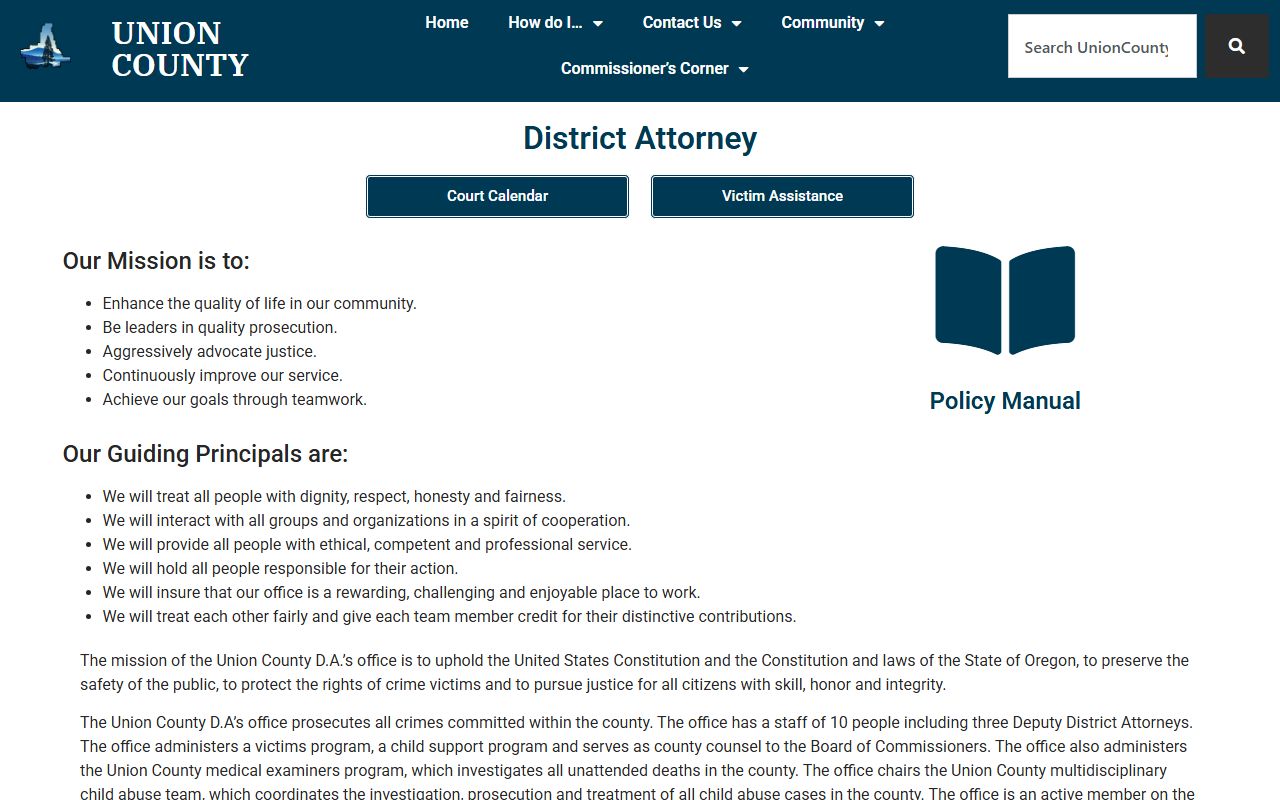
That office is relevant because the prosecutor decides which charges proceed into the criminal court file.
Search Union County Criminal Records
Start with the Oregon Judicial Department's records and calendar search for basic criminal case information and court dates. For detailed register access, use OECI or OJCIN when credentials are available. Copies, certified copies, exemplified copies, and older nondigitized files go through the Union County Circuit Court records request process.
- Confirm the case belongs to Union County Circuit Court, Justice Court, Municipal Court, or federal court.
- Search by case number when known, or by defendant name with careful spelling checks.
- Open the register or docket to review charges, hearing events, pleas, dispositions, and judgment entries.
- Use the courthouse kiosk or records request process when the docket shows a document that is not viewable online.
- Ask for a certified or exemplified copy when the record must be used for official legal purposes.
The county jail roster can help confirm current custody, but it is not the criminal case file. Booking or charge detail belongs with Union County inmate records and arrest-to-charge material, while the full court outcome belongs in the criminal case record. A docket entry should be checked against the final judgment before treating a charge as a conviction.
The source from the Union County District Attorney elected-official page identifies the local prosecutor and contact office for criminal filings.
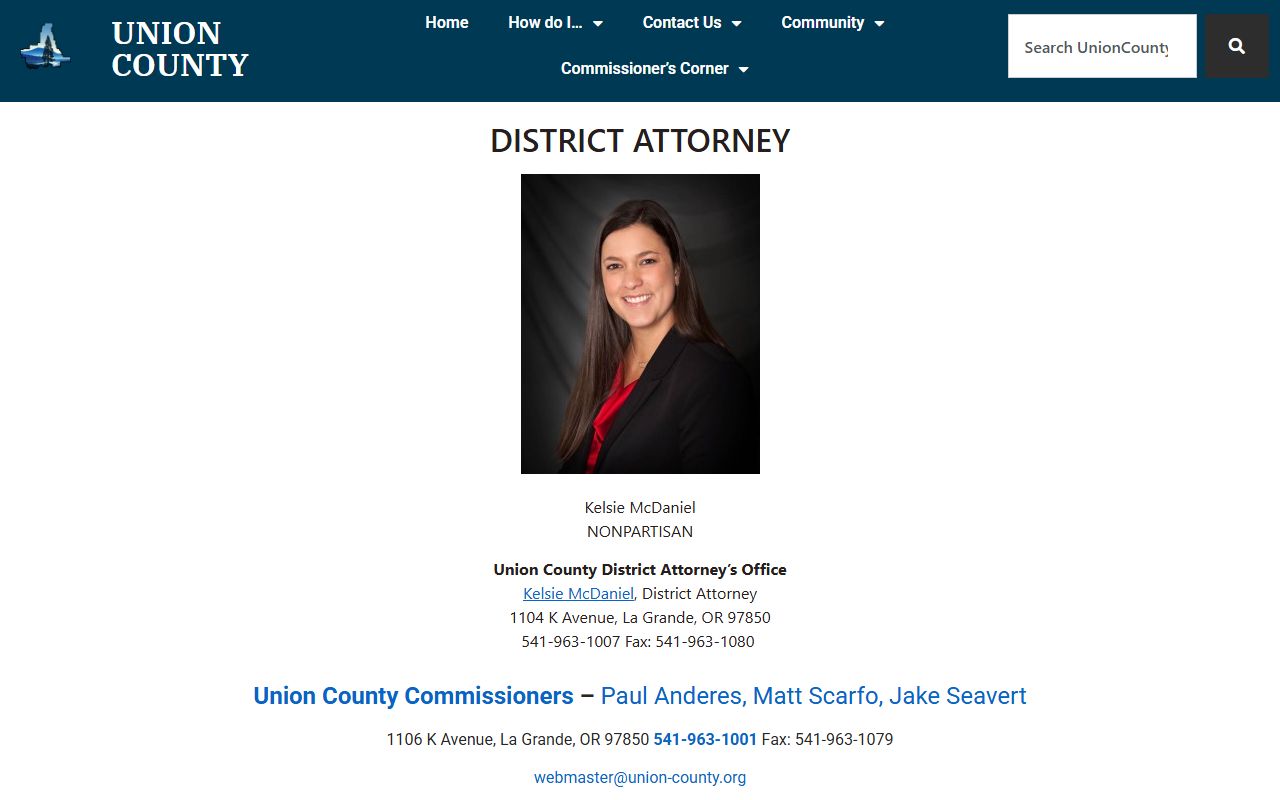
That source supports the local distinction between law-enforcement arrest activity and prosecutor-filed court charges.
Stages of a Criminal Case
A criminal court record changes as the case moves. The charge filed at the start may not be the same charge that ends in a judgment. The docket may show an arraignment, pretrial conferences, motions, plea negotiations, trial settings, dismissed counts, amended counts, warrants for missed appearances, and probation events. Each step has a different legal meaning, so the most recent disposition and judgment matter most.
Case flow: Charges Filed › Arraignment › Pretrial / Motions › Plea or Trial › Disposition › Sentencing
| Stage | What Happens |
|---|---|
| Charges filed | The prosecutor files a complaint, information, indictment, or other charging instrument with the court. |
| Arraignment | The defendant is formally brought into the court case and plea procedures begin. |
| Pretrial and motions | The docket may show discovery, motions, continuances, hearings, and negotiations. |
| Plea or trial | The case may resolve by guilty or no-contest plea, dismissal, acquittal, or trial verdict. |
| Disposition | The result of a charge or case is entered, such as dismissed, convicted, or judgment entered. |
| Sentencing | The court enters jail, probation, fines, restitution, conditions, or other judgment terms. |
Union County Criminal Record Fields
The criminal record is field-driven. It should be read as a current case file, not as a single label. A case may show several charges, each with its own statute reference and status. It may also include financial entries, warrants, probation violations, and later set-aside activity. A public register entry can be enough to track status, but a certified copy of the judgment is usually the stronger proof of outcome.
| Field | What It Shows |
|---|---|
| Case number | The court identifier used to locate the criminal file. |
| Defendant | The person charged in the criminal case. |
| Charges and statutes | Charge names, ORS references, counts, and filed or amended charge labels. |
| Arraignment and pleas | Dates and entries showing plea procedures and plea changes. |
| Motions and hearings | Pretrial requests, orders, continuances, and court appearances. |
| Disposition | The result of each charge or the case, such as dismissed, convicted, or acquitted. |
| Judgment and sentence | Jail, probation, fines, restitution, conditions, and other sentence terms. |
| Warrants and violations | Failure-to-appear entries, probation violations, warrant events, or detainers when public. |
The victim assistance source from the Union County District Attorney's Office shows the county's criminal case support role for victims.
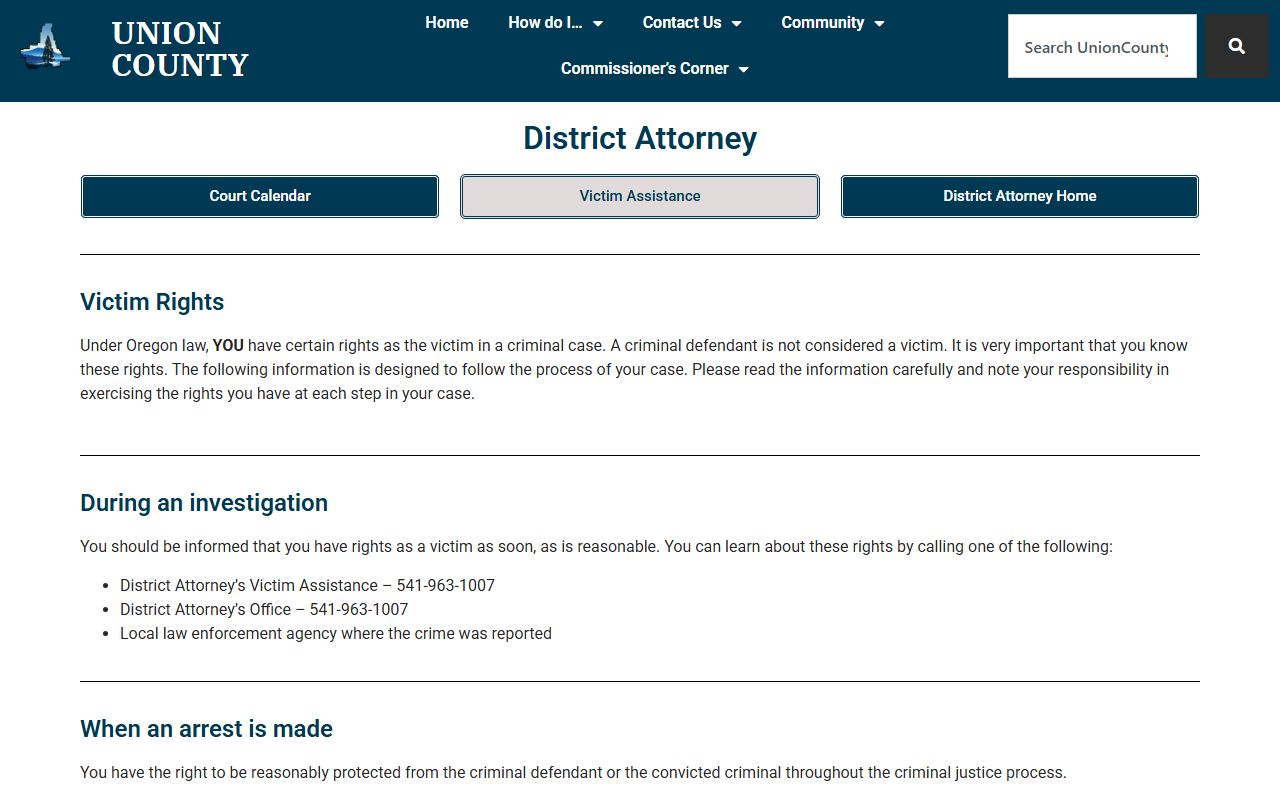
Victim-rights contacts may matter when reading criminal case notices, restitution entries, and case status updates.
Charges vs. Convictions
A filed criminal charge is an accusation in court. A conviction is an outcome after a guilty plea, no-contest plea where judgment is entered, or trial verdict. Union County criminal court records can show charges that were dropped, dismissed, amended, reduced, or resolved without conviction. For charge-level detail after arrest, use the separate arrest and court charges page.
| Charge | Conviction | |
|---|---|---|
| Stage | Filed allegation or count. | Final or current court outcome. |
| Where seen | Charging document, docket, jail roster, or case register. | Disposition, judgment, sentence, or conviction entry. |
| Meaning | The state is accusing the person of an offense. | The court has entered guilt or judgment on that charge. |
| Risk of misread | A dismissed charge may still appear in history. | A conviction may later be set aside if eligible and granted. |
Reading Dispositions and Sentences
Disposition entries should be read count by count. One count can be dismissed while another ends in conviction. A sentence entry may show jail, probation, fines, restitution, community corrections supervision, or other terms. Union/Wallowa Community Corrections handles felony parole, post-prison supervision, probation, and misdemeanants, so a court sentence may later connect to supervision records outside the court file.
The Community Corrections source from Union/Wallowa Community Corrections shows the local supervision agency tied to some criminal sentences.
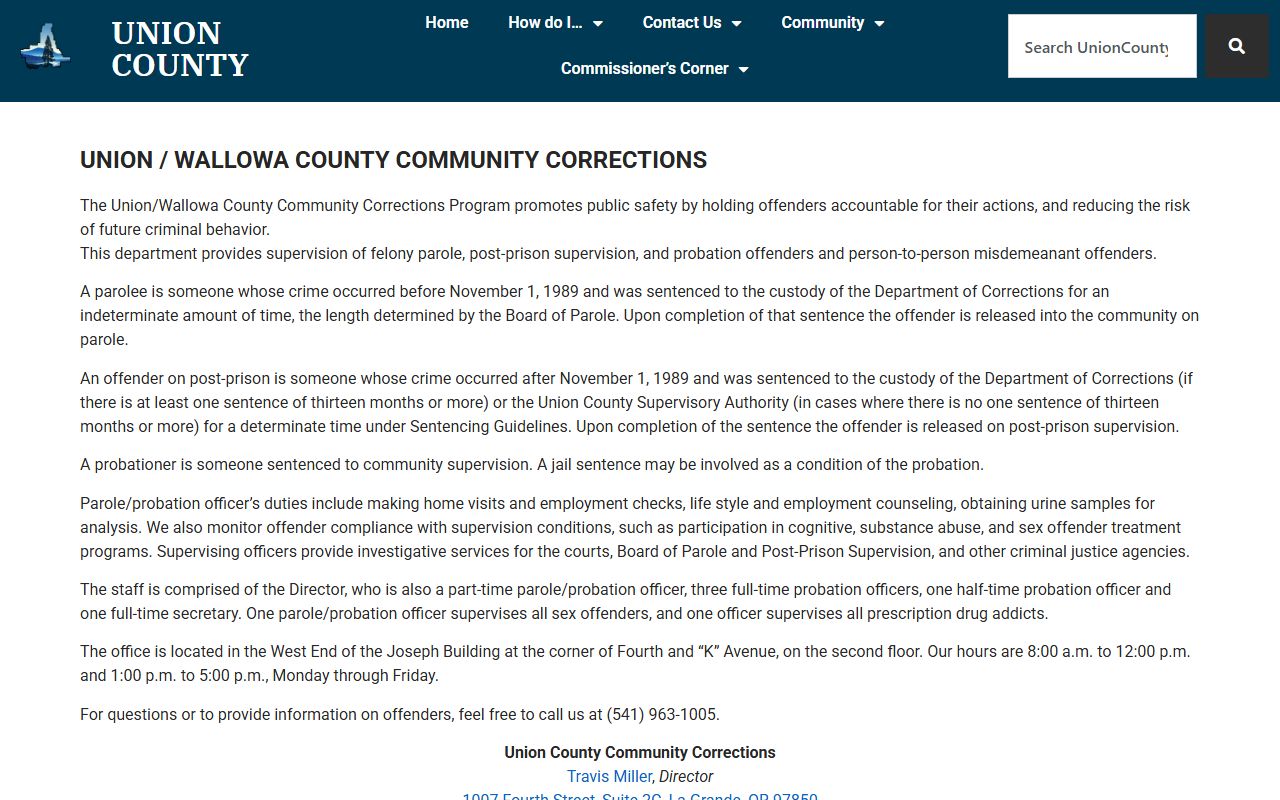
Supervision records are not the same as the court judgment, but they may explain later probation or violation entries.
Sealed vs. Expunged Records
Oregon commonly uses "set aside" for the process many people call expungement. When a set-aside motion is granted, official records of the arrest and conviction are sealed, and the law treats the arrest or conviction as not having occurred. The court creates the set-aside order automatically in the OJD packet process, but the person seeking relief must file the motion in the correct court.
| Sealed | Expunged | |
|---|---|---|
| Oregon term | Sealed from ordinary public view. | Often discussed as expungement, but Oregon's court process is set aside. |
| How it happens | By statute, court order, confidentiality rule, or set-aside order. | Through an eligible set-aside motion under Oregon law. |
| Public access | Ordinary public users cannot view sealed material. | Granted set-aside records are sealed in official systems. |
| Key caution | Some agencies may retain limited lawful access. | Eligibility depends on offense type, timing, later history, and obligations. |
The statute source from ORS chapter 137 includes Oregon's set-aside authority.
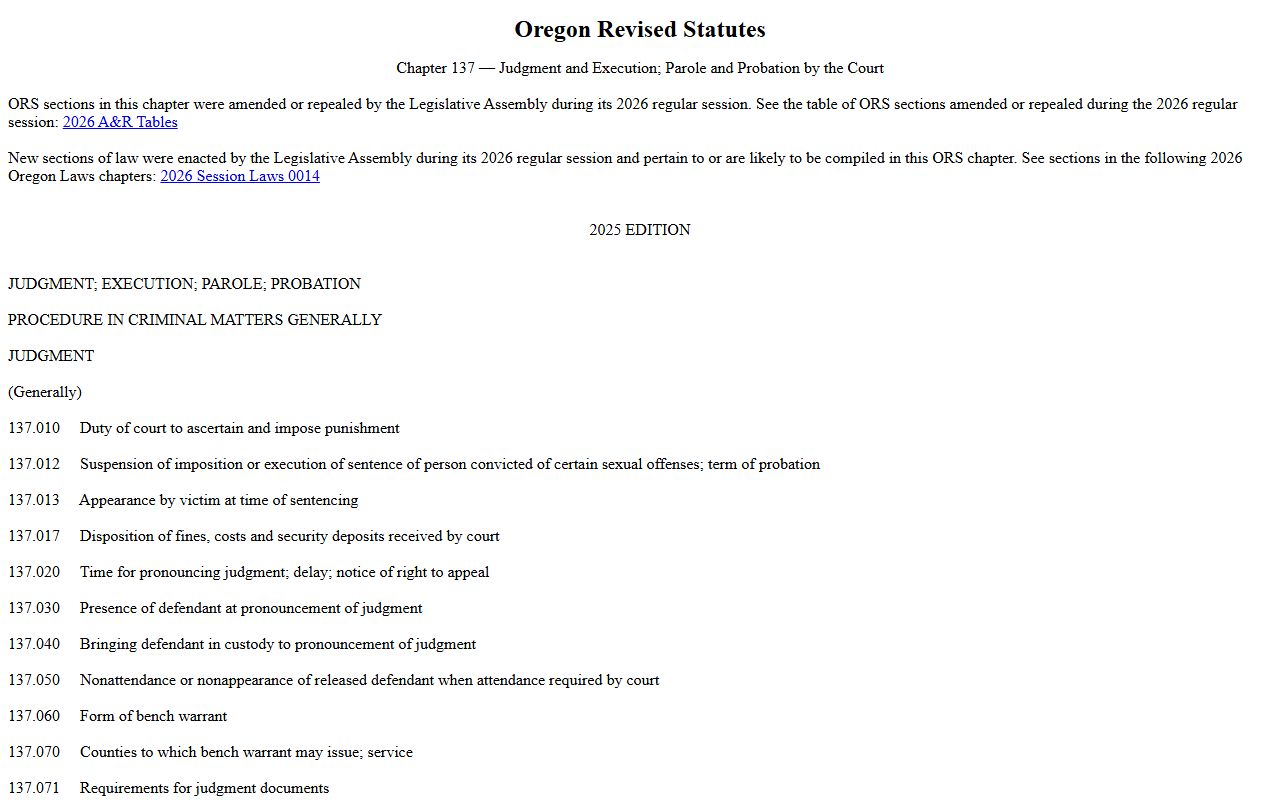
That statute is the correct starting point for set-aside limits, not a general public-records request.
Public Access to Criminal Court Records
Non-confidential Union County criminal court records are public through OJD search tools, OECI, courthouse kiosk access, and court records requests. ORS 7.020 is the court-register authority. ORS 192 governs broader public records held by public bodies, including some non-court county records. Juvenile records, adoption records, sealed records, and protected personal information are restricted.
Key Statutes:
ORS 7.020 identifies the court register framework used for Oregon circuit court case activity.
ORS 419A.255 limits public access to juvenile court records.
Background Check Considerations
A criminal court record lookup is not the same as a regulated employment, housing, credit, insurance, or tenant screening report. Public court records may be incomplete, delayed, sealed, or later changed by appeal or set-aside order. Any official use should verify the case with the originating court and, when required, use a lawful background-check provider that follows the Fair Credit Reporting Act.
Important: Do not treat a docket lookup as an FCRA consumer report for regulated screening decisions.
The federal prosecution source from the U.S. Attorney's Office for the District of Oregon is relevant only for federal criminal cases.
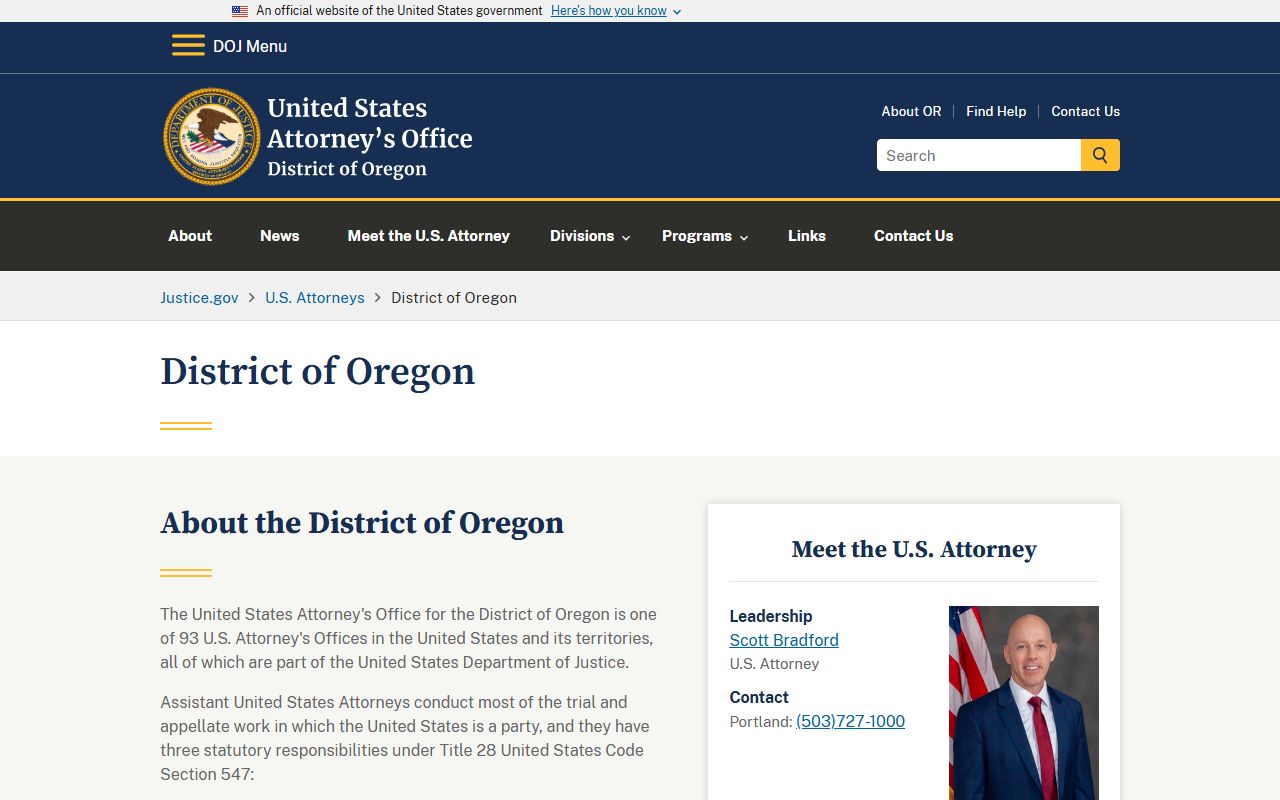
Federal criminal records use federal court systems and should not be searched as Union County Circuit Court cases.
Restricted Criminal Court Records in Union County
Restricted criminal court records include juvenile matters, sealed or set-aside records, adoption-related files, protected-address material, and information redacted for privacy or safety. An active investigation can also affect access to law-enforcement reports, and UCSO may refer a requester to the District Attorney's Office when a report remains under investigation. A denial from one office does not mean the court docket is sealed, and a public docket does not mean every document is open.
Public defense also affects how criminal cases move. Union County's official pages did not identify a named local public defender office, but Oregon public defense is administered through the Oregon public defense system for eligible state and local defendants. Federal defendants use the Office of the Federal Public Defender, District of Oregon, when eligible.